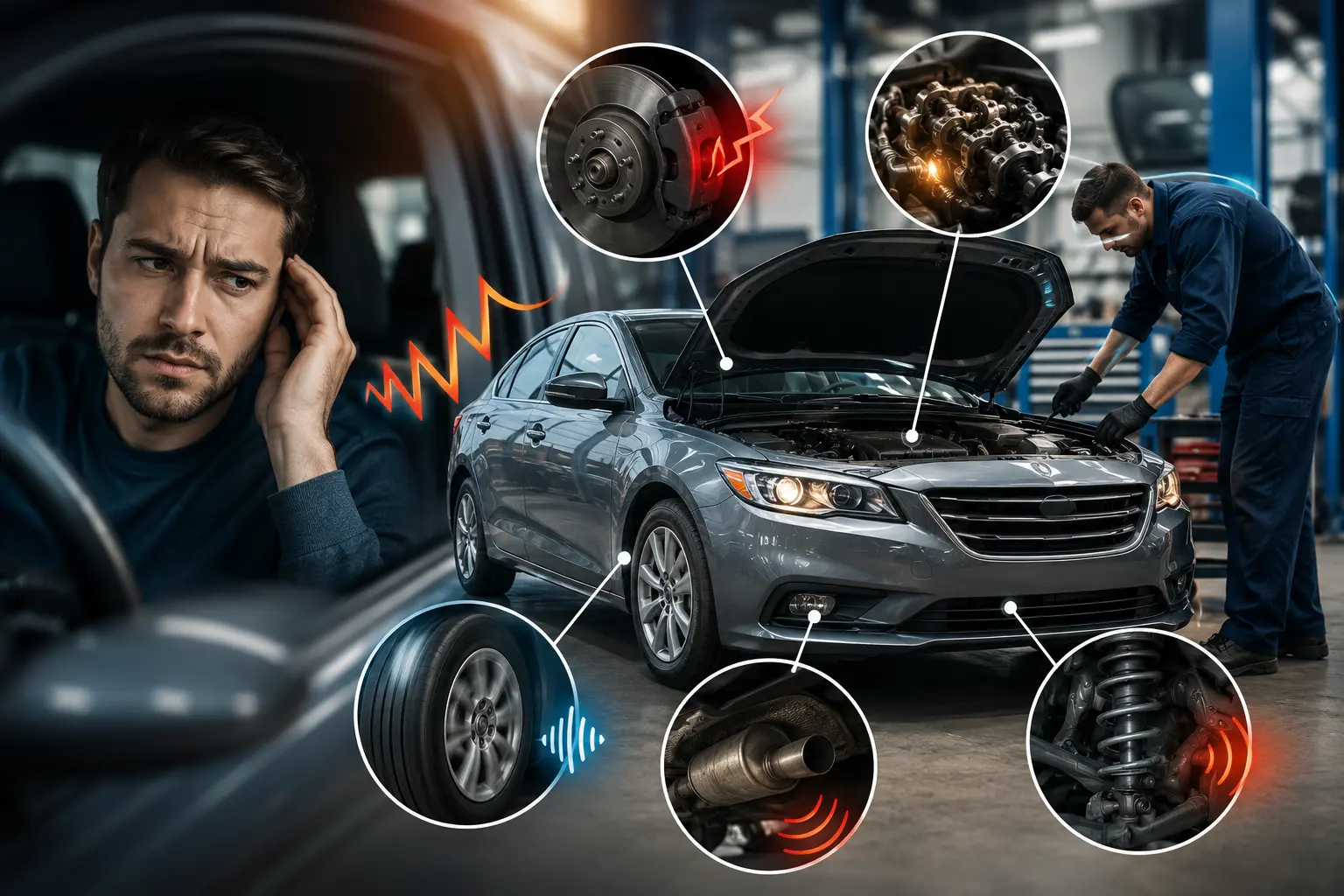
Strange car noises can be easy to ignore, especially when your vehicle still seems to drive normally. However, unusual sounds are often the first warning signs of developing mechanical problems. From squealing brakes and engine knocking to rattling exhaust systems and humming wheels, these noises can indicate wear, damage, or failing components that need attention.
Understanding what your car is trying to tell you can help you prevent costly repairs, improve vehicle safety, and avoid unexpected breakdowns. In this guide, we’ll explore the most common car noises, their possible causes, and when you should schedule a professional inspection.
Why You Should Never Ignore Unusual Car Noises
Modern vehicles are engineered to operate smoothly and quietly. When a new sound appears, it’s often a sign that a component is worn, loose, or malfunctioning.
Ignoring strange vehicle noises can lead to:
· Increased repair costs
· Reduced fuel efficiency
· Poor vehicle performance
· Safety hazards while driving
· Unexpected roadside breakdowns
The earlier a problem is diagnosed, the more affordable and straightforward the repair is likely to be.
Common Car Noises and What They Mean
Squealing or Screeching When Braking
A high-pitched squeal when applying the brakes is one of the most common warning signs drivers experience.
Possible Causes
· Worn brake pads
· Brake pad wear indicators contacting the rotor
· Glazed brake pads or rotors
· Dust or debris between braking surfaces
Brake pads are often designed with wear indicators that create a squealing noise when replacement is needed.
What to Do
If the squealing occurs regularly, schedule a brake inspection as soon as possible. Delaying repairs may lead to damaged brake rotors and significantly higher repair costs.
Knocking or Tapping Sounds From the Engine
Engine knocking should never be ignored. This sound often indicates an issue with lubrication or internal engine operation.
Possible Causes
· Low engine oil levels
· Poor lubrication
· Worn engine components
· Fuel combustion problems
When engine parts are not properly lubricated, metal components can create a knocking or tapping sound during operation.
What to Do
Check your engine oil level immediately. If the noise persists after adding oil, seek professional diagnosis to prevent serious engine damage.
Grinding Noise While Driving
Grinding sounds often indicate metal-on-metal contact and should be addressed immediately.
Possible Causes
· Severely worn brake pads
· Damaged wheel bearings
· Transmission problems
· Worn drivetrain components
In many cases, grinding brakes occur when brake pads have worn completely through, causing the backing plate to rub against the rotor.
What to Do
Do not ignore a grinding noise. Continuing to drive may cause extensive damage and compromise vehicle safety.
Rattling Under the Car
A rattling noise underneath your vehicle can range from a minor issue to a sign of significant mechanical wear.
Possible Causes
· Loose exhaust system components
· Damaged heat shields
· Worn suspension parts
· Loose brackets or mounting hardware
Road vibrations and daily driving can gradually loosen components over time.
What to Do
If the rattling becomes more noticeable during acceleration or worsens over time, have the vehicle inspected by a qualified technician.
Humming or Growling Noise From the Wheels
A low humming or growling sound that changes with vehicle speed often points to wheel or tire-related problems.
Possible Causes
· Worn wheel bearings
· Uneven tire wear
· Tire damage
· Wheel alignment issues
Wheel bearings help wheels rotate smoothly. As they wear, they can create a noticeable humming noise, especially at higher speeds.
What to Do
Because wheel bearing failure can affect vehicle control and safety, persistent wheel noise should be diagnosed promptly.
Clicking Noise When Turning
A clicking or popping sound while turning corners is often associated with drivetrain wear.
Possible Causes
· Worn CV joints
· Damaged axle components
· Torn CV boots
Constant Velocity (CV) joints transfer power from the transmission to the wheels while allowing flexibility during steering and suspension movement.
What to Do
Address clicking sounds early. Replacing a damaged CV boot is typically far less expensive than replacing the entire axle assembly.
Hissing or Whistling Sounds From the Engine Bay
A hissing or whistling noise may indicate that air, vacuum pressure, or coolant is escaping from the system.
Possible Causes
· Vacuum leaks
· Cracked hoses
· Intake system leaks
· Cooling system pressure leaks
Drivers may also notice rough idling, reduced engine performance, or warning lights.
What to Do
Schedule a diagnostic inspection if the sound is persistent or accompanied by performance issues.
Clunking Noise Over Bumps
A clunking sound when driving over potholes, speed bumps, or rough roads often points to suspension wear.
Possible Causes
· Worn shock absorbers
· Damaged struts
· Loose suspension components
· Worn control arm bushings
Suspension components help absorb road impacts and maintain vehicle stability.
What to Do
Prompt suspension repairs can improve handling, prevent uneven tire wear, and maintain driving comfort.
Car Noise Diagnosis: When Should You See a Mechanic?
While some noises may seem minor initially, they can quickly become expensive repairs if left unresolved.
You should arrange a vehicle inspection if:
· A new noise appears suddenly
· The sound becomes louder over time
· Performance changes accompany the noise
· Warning lights appear on the dashboard
· Steering, braking, or handling feels different
Professional car diagnostics can often identify issues before they lead to major component failure.
How Routine Vehicle Maintenance Prevents Strange Noises
Many unusual vehicle sounds develop gradually due to normal wear and tear. Regular maintenance allows technicians to identify and replace worn components before they fail.
Routine servicing can help prevent:
· Brake system failures
· Engine wear and lubrication issues
· Suspension damage
· Tire and wheel problems
· Exhaust system deterioration
Following your manufacturer’s recommended maintenance schedule is one of the best ways to keep your vehicle running safely, efficiently, and quietly.
Frequently Asked Questions About Car Noises
Is it safe to drive with a strange noise coming from my car?
Not always. Some noises, such as brake grinding, engine knocking, or wheel bearing growling, can indicate serious safety concerns and should be inspected immediately.
Why does my car squeal when I brake?
Worn brake pads, brake wear indicators, or debris between braking components commonly cause brake squealing.
What causes a knocking sound in an engine?
Low oil levels, poor lubrication, worn engine components, or combustion issues can all contribute to engine knocking.
Can wheel bearings make noise?
Yes. Worn wheel bearings often produce a humming, growling, or droning sound that becomes more noticeable as vehicle speed increases.
How much does it cost to diagnose a car noise?
Diagnostic costs vary depending on the vehicle and the complexity of the issue. However, early diagnosis is usually much less expensive than repairing damage caused by neglect.
Final Thoughts
Strange car noises are often your vehicle’s earliest warning signs that something needs attention. Whether it’s squealing brakes, a knocking engine, rattling exhaust components, or suspension clunks, addressing problems early can save money, improve safety, and extend the life of your vehicle.
If you notice a new or unusual sound while driving, don’t assume it will disappear on its own. A professional inspection can identify the source of the problem and help prevent minor issues from becoming major repairs. Listening to your car today could help you avoid a costly breakdown tomorrow.